In the opinion of Stephen van Egmond, Managing Partner at TinyPlanet, Michael Lopp, a senior manager at Apple, has written a great new book: “Managing Humans: Biting and Humorous Tales of a Software Engineering Manager”. Lopp's introductory site managinghumans.com reveals the sense of humour he brings to the tricky intersection of geeks and management. Stephen says:
When I first came across Michael's writings, I knew that I had found that rare combination of someone who can compose their observations and wisdom into tight, interesting, well-written pieces. It also helps that he's funny as hell.
The book is a collection of essays from his own blog, Rands In Repose. It’s Michael’s belief that developers are trained to manage bits well, but not humans. When developers are promoted to managers much harm can be inflicted. Michael uses stories and humour to warn us of the many perils of management and how to navigate round them.
As Michael tells it, all managers face the risk of losing their perceived power:
Managers lose it when they are no longer questioned in their decisions. When the team stops questioning authority, the manager slowly starts to believe that their decisions are always good and while it feels great to be right all the time, it’s statistically impossible. The most experienced managers in the world make horribly bad decisions all the time, the good ones have learned how to recover from their decisions with dignity, but, more importantly, help from the team.
In 1.0 Michael presents his pyramid of building a 1.0 company:
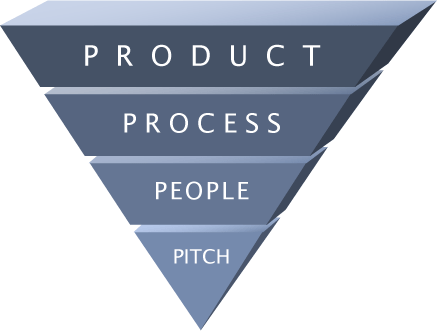
In his opinion everything is balanced atop the “Pitch”. Until the company ships that first successful product everything is teetering atop the pitch.
In describing the pyramid he lays out five facts:
0 – Startups almost always fail.
1 – No one is indispensable – people who can’t stay focused on the pitch will destroy the organisation.
2 – Process defines communication – whether it’s wiki for ideas or a whiteboard for tracking bugs the processes that people engage in define the modes of communication.
3 – Each layer shapes and moves those near it – when the pyramid is working people will influence the pitch and the product will change the process. When the layers have stopped affecting each other suspect stagnation.
4 – You don’t have a company until you have a product – without a useful product your customers have nothing.
In building 1.0 you’re not just building a product, you're building the culture which will help build future generations of product.
In Stephen’s opinion the book is worth reading because:
Michael speaks the language of someone who has been through a small business or aggressive development schedule. This isn't recycled Dilbert bile, this isn't the pap in software engineering textbooks, it's a realistic rendering of what it's like to manage regular, fallible, territorial, sometimes disgruntled, human beings
