InfoQ Homepage Business Content on InfoQ
-
Learning Out Loud (Under Near-Existential Pressure)
Laura Savino shares how developers can navigate AI disruption by embracing a beginner’s mindset, normalizing imperfect learning, and building resilient engineering cultures that scale through change.

-
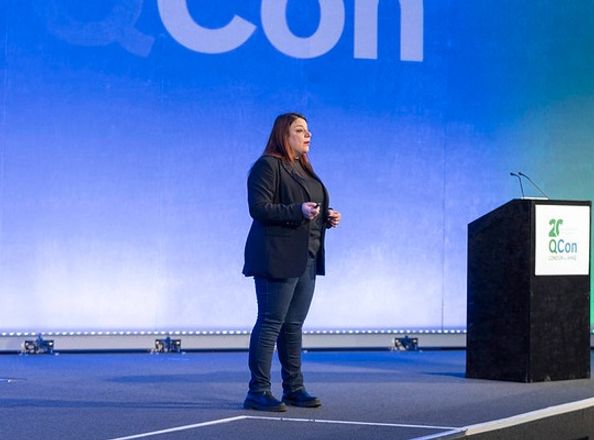
The Socio-Technical Staff+ Engineer: Architecture, Culture and Organisational Change
Vanessa Formicola explains how staff-plus engineers must act as socio-technical landscape architects, aligning technical design with organizational culture, reward systems, and human dynamics.
-
Panel: Who Builds the Frontend Now? (And What Breaks When They Do)
The panelists discuss AI's impact on frontend architecture, vibe coding risks, agent interfaces, code quality, and open-source sustainability.

-
AI is an Amplifier: Scale High Performance, Not Dysfunction
Nathen Harvey discusses key findings from the 2025 DORA research, explaining how AI adoption, internal platforms, and organizational guardrails drive real software engineering performance.

-
Complexity and Creativity in Software Engineering
Phillip Mortimer explains why all code is now write-only in the AI era, detailing how software leaders must shift focus from line-by-line PR reviews to detailed tests and self-healing architecture.

-
Teaching Engineers, Trusting AI: How Education Enabled Autonomous Code Review
Sarah Deitke shares how Duolingo scales AI adoption through engineering literacy programs and demonstrates how AI-driven code reviews reduced pull request merge times from 18 to 12 hours.

-
From Models to Agents: Building Context-Aware Consumer AI at Scale at DoorDash
Sudeep Das explains how DoorDash transforms e-commerce recommendations using LLM-driven semantic consumer memory, hierarchical semantic IDs, grounded agentic search, and multi-tiered LLM ranking.

-
Adopting Memory-Safety and Fine-Grained Compartmentalisation with CHERI
David Chisnall explains how CHERI architecture unifies hardware capabilities and pointer metadata to deliver memory safety and fine-grained, efficient software compartmentalization.

-
Keeping ChatGPT Fast as AI Development Accelerates
Martin Spier shares how agentic coding accelerates release velocity at OpenAI and explains how always-on AI agents redefine performance engineering to keep ChatGPT fast at massive scale.

-
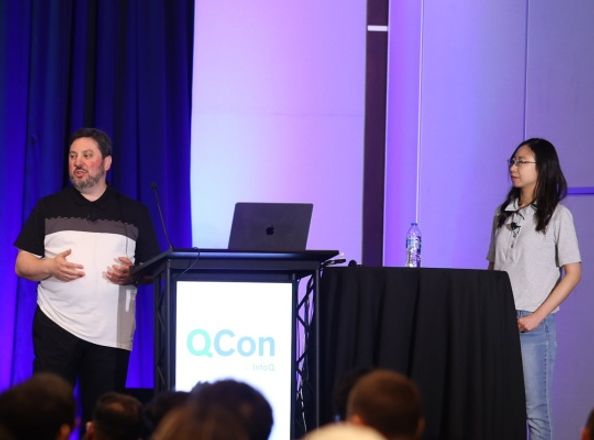
Compiling Workflows into Databases: the Architecture That Shouldn't Work (But Does)
Jeremy Edberg & Qian Li explain how to replace complex external orchestrators with DBOS Transact, an open-source library that implements durable workflow execution directly inside your database.
-
Panel: Building a Culture that Works
The panelists discuss shaping high-velocity, psychologically safe engineering cultures and the indistinguishable link between modern technology and organizational performance.

-
Empower Your Developers: How Open Source Dependencies Risk Management Can Unlock Innovation
Celine Pypaert explains the shift from reactive firefighting to proactive risk management by identifying vulnerabilities, utilizing SCA tools, and defining ownership within the software supply chain.