InfoQ Homepage Programming Content on InfoQ
-
Interview with Simon Ritter on Java 9
Alex Blewitt talks to Simon Ritter at QCon London 2016 about Java 9, the impact that Jigsaw will have on developers, and Java on the Raspberry Pi along with the differences between the Azul JVMs and Open JDK.

-
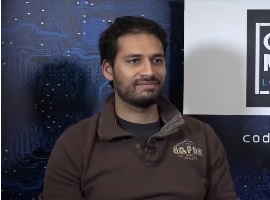
Jason McGee of IBM Talks about Open Source Projects and the Interactions at the Collaboration Summit
Jason McGee of IBM talks to Rags Srinivas of InfoQ about the importance of different open source initiatives, like Container Native Cloud Foundation (CNCF), Open Container Initiative (OCI) and how to sort through them from a developer perspective.
-
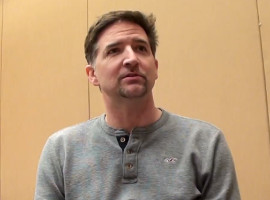
Rachel Reese on The Good and Bad of Microservices (with F#)
Rachel Reese on the challenges and benefits of using microservices at Jet. In particular how F# made it easier to refactor and maintain hundreds of microservices. The hard bit is the infrastructure.

-
Peter Alvaro on Distributed Programming, CRDTs, LDFI
Peter Alvaro discusses some of the reasons that distributed programming is hard, Lineage-driven Fault Injection, static analysis to check deterministic behaviour, CRDTs, and much more.

-
Interview with Gil Tene on Hardware Transactional Memory
Gil Tene speaks to Alex Blewitt at QCon London 2016 on the upcoming support for hardware transactional memory in server-class Intel chips, and what it will mean for the JVM. Tene discusses what kinds of applications will benefit from speculative lock elision and increasing concurrency in the near future on multi-core server platforms.

-
John Sheehan on Web API Quality
In this interview, John Sheehan expounds on what constitutes a high quality API. The first half focuses on developer experience which will help API consumers distinguish between top tier API providers and the rest. The second half provides pointers for API providers aiming to improve various aspects of API quality, specifically performance across the API lifecycle.

-
Josh Long on Spring Boot, Spring Cloud and Microservices
Josh Long talks about the philosophy behind Spring Boot and Spring Cloud. He also discusses some of the common distributed computing problems Pivotal are trying to solve - externalised configuration, service discovery, client-side load balancing, distributed tracing and so on, and talks about some major clients including Netflix, Baidu and Alibaba.

-
Gil Tene on Understanding Latency
Gil Tene explains latency and how it relates to service and response times, measuring latency, common misconceptions about latency, what to do when a system's latency can't meet SLAs, and much more.

-
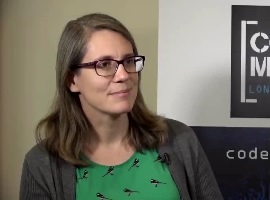
Stephanie Weirich on Dependent Typing, Extending Haskell, Type System Research
Stephanie Weirich gives an introduction to the ideas behind dependent typing, dependent typing in Haskell, extending Haskell, and the status and future of type theory.
-
Leah Hanson on the Julia Language, Static Analysis
Leah Hanson explains the characteristics of the Julia language, its type system, how to use and implement static analysis for the Julia language in the Julia language, and much more.

-
Monica Beckwith on Tuning and Optimizing Java Garbage Collection
Performance engineer Monica Beckwith covers tuning java garbage collection, including: defining customer requirements; methodology; baselining and measurement; strengths and weaknesses of the different collectors; heap usage; causes of GC pauses; the distribution of pauses; tuning pause characteristics; going off-heap to avoid collection; scaling GC on multi-core and high memory machines.

-
Amir Chaudhry on Unikernels, MirageOS, HalVM, Rump Kernels
Amir Chaudhry explains the ideas behind Unikernels, implementations like the OCaml-based MirageOS and Haskell-based HalVM, Rump Kernels for integrating with legacy code and much more.