InfoQ Homepage Cloud Computing Content on InfoQ
-
Exploding GPUs and the AI Infrastructure Challenge
Andrew Martin explains why AI security relies on Kubernetes security, highlighting new threat vectors like prompt injection, unconstrained agents, and the unique risks facing GPU infrastructure.

-
You Can't Trust Your AI Bill. And Neither Can I
Erik Peterson shares why AI costs are eclipsing cloud bills, explaining how token spend, unit economics, and AI autonomy impact software architects and engineering leaders.

-
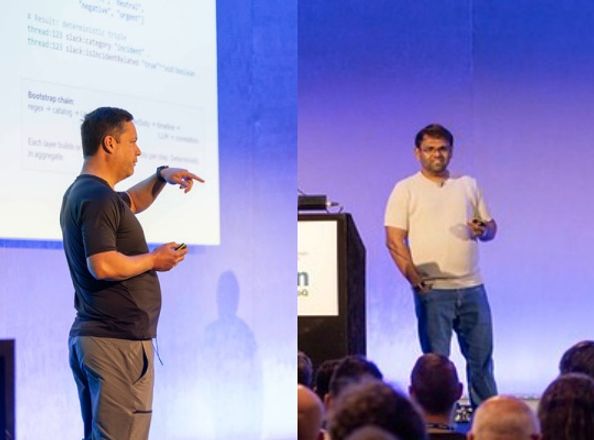
Ontology‐Driven Observability: Building the E2E Knowledge Graph at Netflix Scale
Prasanna Vijayanathan and Renzo Sanchez-Silva explain how Netflix uses AIOps, AI agents, and operational ontologies to turn high-scale telemetry into automated, proactive incident root-cause analysis.
-
Beyond Observability: Evolving Production Operations in the Age of AI
The panelists share how AI and automation reshape production operations, turn system data into actionable insights, and change architectural practices for modern, complex software delivery.
-
From Consumers to Builders: Turning 200 of our Team into Agent Creators in Two Weeks
Ben Maraney explains how Forter enabled R&D teams to build internal AI agents fast by simplifying tools, using custom MCP servers, and removing organizational roadblocks to maximize engineering ROI.

-
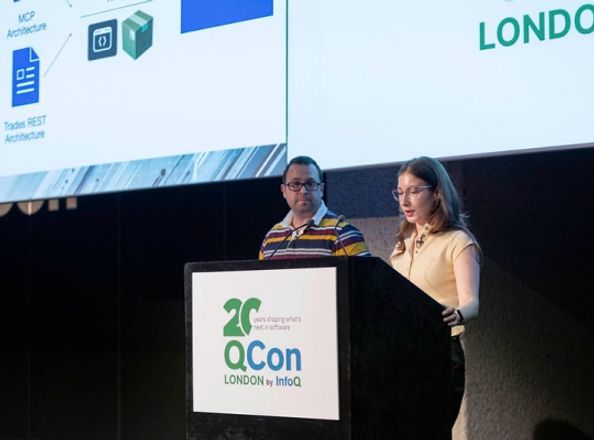
APIs for Agents: Rethinking API Programs in the MCP Era
Jim Gough and Andreea Niculcea explain how Morgan Stanley leverages Architecture as Code with CALM and MCP to scale secure, compliant API platforms for AI agents and future protocols like A2A.
-
How to Run on Three Clouds at Once, and When Not to
Ross McFarlane and Kevin Holditch explain how Form3 engineered a triple active multi-cloud architecture across AWS, GCP, and Azure to deliver ultra-resilient, regulatory-compliant payment systems.

-
Fixing the AI Infra Scale Problem by Stuffing 1M Sandboxes in a Single Server
Felipe Huici discusses scaling microVM sandboxes for AI workloads, explaining how millisecond cold boots, high density, and stateful scale-to-zero achieve efficient, secure cloud isolation.

-
From S3 to GPU in One Copy: Rethinking Data Loading for ML Training
Onur Satici discusses Vortex, an open-source columnar file format designed to bypass CPU bottlenecks, enabling ultra-fast S3-to-GPU data streaming and dynamic query pruning at up to 60 Gbps.

-
Running AI at the Edge: Running Real Workloads Directly in the Browser
James Hall explains why engineering teams should shift AI workloads on-device. He shares local inference strategies, WebGPU optimization techniques, and architecture choices for zero-trust privacy.

-
Continuous Delivery for Foundational Platforms
Ian Nowland explains why standard CI/CD models fail for foundational platforms, sharing lessons from AWS and Datadog on how engineering leaders can implement safe progressive deployments.

-
Enchant Your AI and APIs with eBPF Magic 🪄
Dan Finneran explains how to use eBPF and AI gateways in Kubernetes to transparently observe, modify, and control unowned AI agent API calls without altering source code.