InfoQ Homepage Observability Content on InfoQ
-
Zero Trust Agent Systems that Pass Audits and Still Ship
Advait Patel explains how to secure AI agents in production by moving security boundaries to the tool layer, enforcing workload identity, and capturing structured audit traces for compliance.

-
Wrangling Telemetry at Scale: a Guide to Self-Hosted Observability
Colin Douch explains the trade-offs of self-hosted observability, detailing how to connect metrics, logs, and traces while managing complexity and scaling costs across microservice architectures.

-
Move Fast, Don’t Break Trust: Shipping Constantly with Humans and beyond
Suhail Patel explains how Monzo built a paved platform stack, opinionated tooling, and fast CI checks to help engineers and AI agents ship microservices safely and continuously at scale.

-
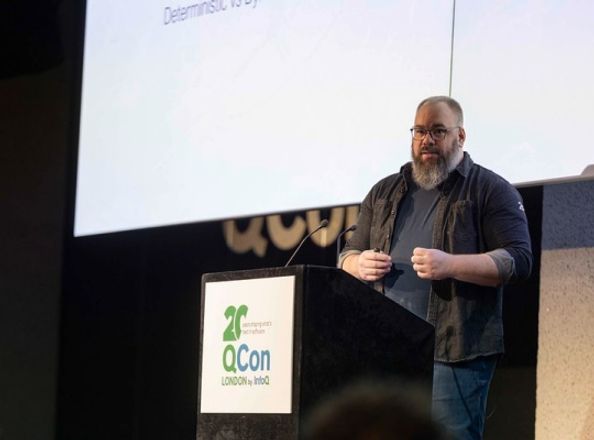
How Eve Online Leverages Head Based Sampling to Observe "Fun"
Nicholas Herring explains how EVE Online balances cost and fidelity using 100% head-based dynamic and deterministic sampling to monitor a 20-year-old monolith alongside modern domain services.
-
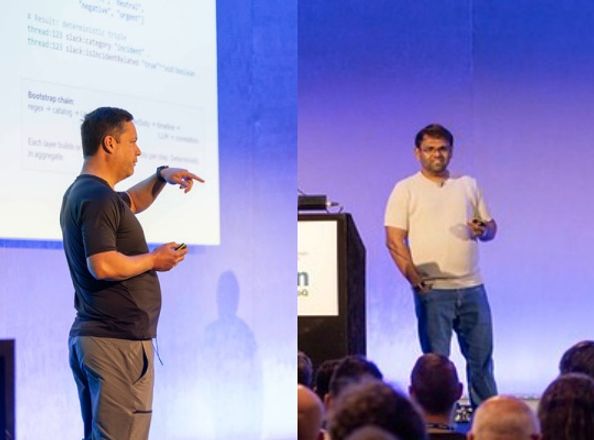
Ontology‐Driven Observability: Building the E2E Knowledge Graph at Netflix Scale
Prasanna Vijayanathan and Renzo Sanchez-Silva explain how Netflix uses AIOps, AI agents, and operational ontologies to turn high-scale telemetry into automated, proactive incident root-cause analysis.
-
Building Reusable Evaluation Frameworks for Agentic AI Products
Susan Chang shares how Elastic built a production-grade AI agent evaluation framework, detailing lessons on tracing, LLM-as-a-judge, programmatic evals to prevent regression across engineering teams.

-
Beyond Observability: Evolving Production Operations in the Age of AI
The panelists share how AI and automation reshape production operations, turn system data into actionable insights, and change architectural practices for modern, complex software delivery.

-
Adaptive Recommenders in the Real World: Inference, Evals, and System Design
Mallika Rao shares why building adaptive recommendation systems requires shifting focus from isolated ML models to real-time feedback loops, retrieval freshness, and production-level constraints.

-
Can Claude Fix Itself? Using LLMs for Incident Response
Anthropic's Alex Palcuie shares how LLMs transform incident response, highlighting where Claude excels at log analysis and why automated AI SREs still can't replace human judgment.

-
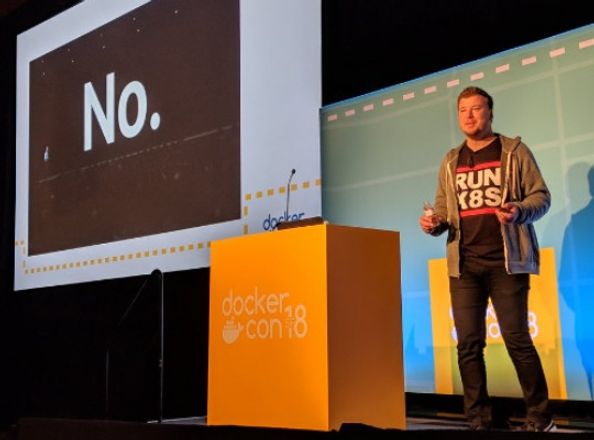
Enchant Your AI and APIs with eBPF Magic 🪄
Dan Finneran explains how to use eBPF and AI gateways in Kubernetes to transparently observe, modify, and control unowned AI agent API calls without altering source code.
-
Keeping ChatGPT Fast as AI Development Accelerates
Martin Spier shares how agentic coding accelerates release velocity at OpenAI and explains how always-on AI agents redefine performance engineering to keep ChatGPT fast at massive scale.

-
From Confusion to Clarity: Advanced Observability Strategies for Media Workflows at Netflix
Naveen Mareddy and Sujana Sooreddy explain how Netflix monitors massive media encoding workflows. They discuss scaling to 1M+ trace spans and using Flink to unlock real-time business insights.
