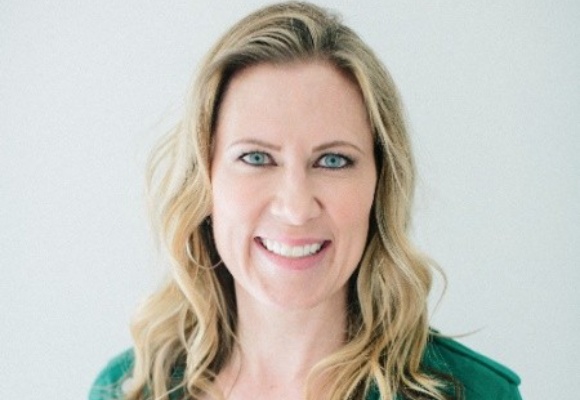
Erica Pisani, host of the Performance and Sustainability track at QCon London 2025, reflects on lessons from assembling the track and from attending the talks. She touches on the importance of the environmental and social aspects of software and hints at how developers can improve them through small steps in the architecture and practices of software development.
Key Takeaways
- The accelerated spread of AI across all sectors puts significant pressure on computing and electrical infrastructure, widening the gap between developing and developed countries.
- Innovation from AI companies in Africa shows that smaller, targeted models yield better results than larger ones, especially when focused on a particular outcome.
- The incorporation of local-first software development principles will improve the user experience, even when the internet connection is flaky, and also reduce the energy impact by reducing the number of round-trips via the infrastructure.
- Ethical debt is the long-term cost of choosing speed and growth over socio-environmental responsibility while developing software products.
- Software developers can improve the ESG impact of software by embracing and promoting software architecture practices that effectively use resources.
Subscribe on:
Transcript
Olimpiu Pop: Hello everybody. I'm Olimpiu Pop, an InfoQ editor, and I have in front of me Erica Pisani, one of the track hosts of QCon London 2025, and a very important track in my opinion.
One that is important in general, but even more important these days. And the name of the track was performance and sustainability, which seems to be two opposing words. So, Erica, please introduce yourself.
Erica Pisani: Hey, nice to meet you. My name's Erica. I'm based out of Toronto, Canada. I'm a senior software developer at Float Financial, a FinTech company.
As you mentioned, I was lucky enough to be the track host for the performance and sustainability track at QCon London 2025, and I'm part of the programming committee for QCon London 2026.
Olimpiu Pop: Congrats. Happy to see you on that lineup. I think it's important that you have such wonderful people and their presentations.
Erica Pisani: Oh, thank you.
Infrastructure should be both performant and sustainable [01:31]
Olimpiu Pop: And what was interesting for me is that more than just performance and sustainability, which was obviously in the track name, we had also ethical aspects, and that's something that usually falls behind. How did you put all these things together? What was the heuristic, or what was the gut feeling that pushed you to choose these topics?
Erica Pisani: Yes. So, when I was reached out to put together the track, what I knew right out of the gate was that I wanted to try to cover all the different angles you could look at performance and sustainability. And I tried my best to represent that. And obviously, there are only five or six talks that you can get in a given track, but I tried to cover as many angles as I could in those five or six talks. What I went in thinking was that I wanted someone who could speak to efforts to encourage a performance and sustainability mindset, where they're not at odds but are actually quite complementary at a leadership level within the organisation.
And that's why I reached out to Ludi about her talk, "What I wish I knew when I started with GreenIT". I think many conversations, in a good way, are grassroots-driven. Many individual software developers are very keen on working toward building a better future in whatever form it takes for them. But what I felt was missing in the conversation was that perspective. So, I was really excited to have Ludi on board and to have that talk featured. Obviously, AI has been a huge thing over the past couple of years, and I knew that it needed to be a very important part of that conversation in that track.
And so that's why I was super stoked to have Jade on the track, because her work is not... Bigger is better when it comes to AI models and LLMs. She focuses on creating very performant, smaller models and not just from the environmental standpoint of the amount of time and energy and money involved in building these large LLMs, but also from how you are compensating the people providing that training data? It's pretty well known that these more popular LLMs, like ChatGPT and Claude, leverage the internet. There was a pretty well-known lawsuit, I think, with writers and publishers, I think, from Australia in the case of Anthropic, because they basically downloaded their works off a site.
And so, Jade's talk touched a little bit on how to make it sustainable to get the training data that you need, and not just any training data, high-quality training data, and compensate the people providing it. And so, I think the different ways that she touched on that were a perspective that me being based in North America, don't often see. I think the same may apply to Europe as well. And so, just having that fresh take was something I was really excited about and looking for, and I was initially having a hard time finding it until I came across Jade. I hoped that by reaching out to her, she would say yes; she did.
And then, another angle was the local-first software movement. That's gained a lot of traction in and of itself because of its focus on increased privacy for users who use the software, not having to rely on cloud services. And network reliability is also something that, again, I'm based in a big city in North America. I take that for granted sometimes, and that's not true for a lot of people in the world. And so, I wanted the local first software movement at the table in this track because they are not only showing what performance software can look like in unreliable network scenarios.
But in some ways, they are more sustainable because, as I touched on in a previous talk on edge computing, there's a lot of energy consumed in transmitting data over the wire. And so, if you don't have to do that or you do that as little as possible, that translates to a very beneficial and environmentally sound outcome when you build software like that. And so, again, performance and sustainability, and that context, aren't at odds; they're actually quite complementary. And then the other two folks, Sarah Hsu, who is well known in the Green Software Movement, Sara Bergman and Ann, published a book titled Building Green Software.
And one of the challenges with moving toward more sustainable software is that you have to measure something. You have to see if you're like anything else in software. You can't fix what you can't measure, and you can't prove that things are moving in the right direction, depending on the goals of the business, if you don't have metrics. And Sarah, I wanted her background and expertise in this track because she knows this in and out, obviously. And then the last person I wanted to have was someone who could take a more systems-level look at things.
So, like all these different levels I tried to touch on the track, Holly was able to talk about all the servers that we're running, all the data that we're collecting and really challenging that and showing not only the environmental impacts of, let's say, practices that we take for granted, like just take all the data that you need because you never know when you need it. I loved that she showed in the challenge how it can be very inefficient for businesses, not only in a monetary sense, but even in the environmental impact that it has, where we're just storing all this data and consuming energy to store it, and it's never ending up being used for any beneficial purpose.
Afterthoughts of the "Performance and Sustainability" track from QCon London 2025 [06:39]
Olimpiu Pop: Nice. Well, I didn't think of it that holistically, as nicely as you put it, but it makes sense because you have pretty much your low-level point of view, where you're just looking at how to design software to just think about it, what you actually need, and then the ethical aspect. And I don't know if it was one of your intentions with having Jade there, but you actually made it global because at many points in time, Africa is not represented. And Jade brought attention to many people through her presentation, the recording on the website, and the podcast, because I had a follow-up discussion with her as well, covering a lot of aspects we don't think about.
And one of those is the bias that the whole internet has, and that's very focused on the Western society, mainly white, middle-aged males speaking English, and that's something that needs to be changed. And I think that's very important. And one of the lessons that I learned from the discussion with Jade is that you don't have to have the biggest model, but the most accurate one, and that's close to what you actually want. For instance, if you're, I don't know, trying to do NLP in Romanian, and I just go with Bulgarian, it'll be tougher than having another Latin language. So, she has a bunch of nuggets of wisdom worth hearing.
And with Holly, I had a couple of conversations over the years about this and things that we take for granted, and it just focuses on our comfort. For instance, I know we are listening to music on YouTube and that it's in HD. All the bandwidth we use is just to download those things on our machine, while we actually only need the sound. Those are just things that we might shift a small switch in our brain, and then things will be a lot easier. And given the scale that these applications have, it's very impressive because we are talking about hundreds of millions of users who are usually online. So, yes, it's important. Thank you for pushing all these things together.
But the question goes, especially as you put it, you're looking to be part of the program committee for next year, what are your lessons learned? What would you try to bring to just have a teaser for what's next for QCon? Because I suppose you have a couple of follow-up thoughts and something that you would like to see as a follow-up conversation for what you already put together.
Erica Pisani: Yes. So, I can't recall if it was already announced. I think it might've been, but there are a couple of tracks in particular that I'll be helping champion, although the programming committee works together to help put together all the tracks. But the ones that I'm championing right now are architecting for resilience and organisations in flux. And this is more like a people-and-process track, navigating the AI hype, basically. And while there isn't a performance and sustainability-focused track at QCon, that doesn't mean there aren't people who could be part of those tracks as speakers and incorporate these aspects into them.
I think architecting for resilience is a good example of the track where that is possible, where, again, going back to let's say the local first software movement, if you're designing things that are offline first, they're not assuming that you will be connected to the internet, they're very resilient. I guess, in some ways, it's focusing on distributed systems and performance, and sustainable software tends to be, by its nature, distributed. Yes. I'm not sure. I can't give too much of a sneak peek into upcoming speakers or anything because it's still early days.
Olimpiu Pop: That was not my intention, but it was more about your takeaways after the QCon and such a nice lineup. Well, no pressure.
Erica Pisani: No, no, no worries. I guess my biggest takeaway from the track was from the people I managed to chat with who were attendees; some folks, even though the Green Software Movement has been around for a few years, still aren't aware of it. And when they see it and the talks given in this space, they get really excited about the possibility of incorporating this into their day jobs, if they so choose. They don't necessarily need approval or a blessing from a manager or a higher-up.
There's things that they can do in the design decisions that they make and the choices of vendors that they can potentially make that allow them to help move the needle in the right direction as far as green software is concerned while still being performant because ultimately what business care about at the end of the day is like meeting their various goals, whether they're business, whether they're corporate responsibility ones that involve tracking emissions, that's ultimately what they care about. But yes, the other element was that they just didn't know it existed, and when they realised it, they wanted to be part of it.
And for me, that was one of the bigger takeaways from hosting that track and chatting with people afterwards: just how excited people are that there is something they can do to help fight the climate crisis, in various ways, big and small.
You can have green software even without the manager’s approval [11:36]
Olimpiu Pop: For me, what we don't realise is the impact we have, because most of us are working on very efficient machines, but we don't really understand that, over the wire, we have huge machines. Probably most of us haven't visited a proper data center and we don't really understand that that's actually industrial. We don't understand that the cable is plugged into a power grid that might burn fossil fuel. And depending on where it goes in 2024, Adrian Cockcroft spoke about it, and he just presented his perspective after working for AWS for a long period of time, and just providing the way how the world is split into regions where coal is burned, and obviously everything that was east of, let's say, the European Union.
So, for Romania, everything was dark. There was nothing much in solar. Obviously, things are changing in India and China as well, but there's still a lot to recover. But the Green Software Foundation, because you mentioned Sarah, who is obviously involved with them, and also we have their work in their book, which is about doing software. I kept a couple of metrics in mind for my slide, just to have a picture. I know that you provided more details, so I will leave those as takeaways, but they have a nice poster from the 2023 report, the last one that they did.
And at that point in time, the total consumption of the software industry was equal to the transportation industry altogether, meaning planes, trains, ships, everything. And that was really striking. A lot of people were very surprised by that because how come we are so efficient? Yes. But again, our comfort, our need for that number of nines after the .99 availability, is the cost that we have to pay. And I think that's quite important. Again, the comfort and the way, as you put it, in which we, as software developers, can make decisions. I don't know, it can be very small decisions that actually translate when we're thinking about millions of records translate into a silicon, and that consumes power and so on and so forth.
And I think it's important that we, as individuals, can do a lot of stuff. Obviously, an ocean is formed from multiple drops of water, but if we just join together, we'll form a notion at one point, and it's about the decisions we make. But we are still talking about performance. And what was your takeaway? Is it possible or isn't it possible to have performance, especially when you're looking for resilience and architecting for that when you're also thinking about the ESG and everything sustainable?
Architectural decisions can improve the social-environmental impact of your software [14:17]
Erica Pisani: Yes, I really believe we can. And it obviously depends on the context we're talking about. The topics the various speakers in the performance and sustainability track addressed highlight different aspects of this. One thing that is, I think, a little bit more challenging is, for instance, edge computing, which I believe, coupled with local-first software, can have beneficial performance and environmental impacts. But as you just pointed out, depending on what region of the world you're in, the energy that is created in that local area might not be as clean as, let's say, a data centre in Montreal, which is entirely hydroelectric.
It's one of the cleanest data centres in the world, or in Scandinavia, where it has geothermal. Measuring that can be tricky. And I think I would probably have to do a PhD in order to really measure that effectively. But I think generally speaking, high performance can tie into, do you need to transmit as much over the wire? Do you need a lot of data to do what you need to do locally? If you can get away without needing that, obviously, that's performant for the user and for the business, because they maybe don't have to pull all that data together on the server before sending it over. We saw in Jade's talk on AI models that smaller models can be very effective and highly performant.
It may not take as long to think things over before giving an answer if it's trained on high-quality data. It's maybe a model that's very focused on a subset of problems rather than trying to be something for everyone, unlike a more general-purpose model. But yes, I don't think those two things are at odds. I think that at this point, there's been enough time over the years and enough great people working in different parts of the software industry that have highlighted that even distributed systems, as we talked about, resilience systems, these things can be done in a more environmentally friendly way than maybe we have previously.
And it's just a matter of thinking more creatively about the architecture that we're starting with. And that's something we maybe think of by default as big data centres, rather than a local-first piece of software that occasionally syncs with the central server.
Olimpiu Pop: Yes. I spoke with multiple people over the last four or five years about the Cyber Resilience Act that came to Europe and put guardrails or rules in place for people writing software. Foundations or organisations. And in those conversations, we agreed upon that software is coming of age. We are no longer a small industry. We are actually an industry that is all over the place. We are powering many other industries, and that's important to be seen as well at this point because, as you said, edge computing is very important.
And actually, I saw a post from somebody at MIT the other day in Forbes magazine: edge computing is very important, and probably a lot of the decisions will also be taken on the gadget itself and not sent over the wire. And usually at that point, I have itchy fingers or itchy tongue and I have to say something about it and then what is underlining is the fact that if we manage to do that and have that kind of mentality in each and every architectural decision that we take, it would be much better because if you just open a basic application on your phone, like Instagram maybe, and you see that if you unplug the phone, you already don't have anything to be done, you just have a pop-up.
And those things are just plain nonsense because you just have a lot of things cached locally, so it's pointless not use them. But I think it's also a matter of understanding more. And that pushes me to think about when I was a kid: my parents were always encouraging me to think ahead and think in terms of yes, not just what I like now, and they always said that we were too poor to buy something cheap. And I think that those are the decisions that we as software developers have to take again, because at some point, it feels that we are just following the shiny object, and we don't actually need it.
And I think another mind shift is needed in the industry: we just make the right decision, think it through, and bring everything together. And on top of what you were saying earlier about the human factor in the software development, even nowadays, we know that we don't need any humans to write software; AI is going to do it. The AWS outage proved that pushing people out is very helpful during an hour-long outage.
Erica Pisani: No big deal. Yes.
Olimpiu Pop: Yes, you can see that. All in all, I think the social-technical factor is very important because, if you look at everything, it becomes a lot more. I was discussing the other day with Luca Mezzalira, who is one of the people that we are pushing for micro frontends, and he was pretty much saying the same thing that Sam Newman said in his podcast on the distributed systems, that when you're building a distributed system, you're actually building the team for it as well. And its architecture is dismantling the structure of the teams and the way we do it, mainly focusing on the autonomy of those themes.
And I think all these things tie together, and we are all living under the same sky, and we should care about it because global warming is called global for one reason, because it's happening everywhere.
Pay the ethical debt ASAP [19:43]
Erica Pisani: To add to that, I think there's a term that I'm trying to remember if I read it in a book or I saw it in an article or something, but a term that I think about when, for what you're talking about, is ethical debt. It's a little bit like you just want to get something going first, and you'll deal with the consequences later. And I think that mindset of growth at all costs, because the business is trying to survive, and you're deferring these more important decisions to later, results in this accumulation of ethical debt. And that ethical debt can look like environmental because you're wasting a lot of resources. It can look like a lot of other things.
And I think that if we take the time, because it doesn't take that much time to sit and think for a few minutes or collaborate with other folks to think about what could this look like in seven years, let's say, rather than in the next seven days, there might be some decisions that we can make early on that will prevent a significant accrual of ethical debt and set the software up and the business up long term for success.
So, I 100% agree with you that we are at a place right now where software developers, given the role that we play in so many industries, the software that we're designing, to some extent, we can't just say it's not our decision to make because we do make a lot of small decisions day in and day out from our vendors, from the decision to hold onto data, from the architectures that we're proposing that can help move the needle in a better way.
Olimpiu Pop: What you're saying is very true. And the rule of thumb that I was just thinking while listening to you is something that I think came from Amazon, which was saying that you have two types of decisions: decisions that are easy to change in the past, or it's a one-way door that you'll never be able to come back. And I think that's the lens that you have to look into because something can be agile and then we can just remake it, learn from it and then move forward. Or it's something that we really have to put into an experiment and understand exactly what's going on. And another thing that was crystallising while listening to you was that craftsmanship is very important.
Even though we are in an era of high speed, where we are discussing AI, how fast we do everything, and availability. And now we are not discussing, as we did a couple of years back, when you had beta testing, and then you had a very small number of users that used it, now you have to go back in the open, just think about OpenAI, how they did it. They just put it upfront and then just slowly iterated over different versions of their software. And now they reached almost a billion active users. So, that's unthinkable from other points in time.
But still, I think what makes me happy is the perspective that in important events and people like you are putting upfront a lot of the more ethical aspects, or the social aspects that somebody that has access to the right data can put upfront a service that can be used by many people and to the internet, we become a global village and we can actually have an impact. And your small pet project.
Erica Pisani: Oh my God.
Olimpiu Pop: Come on, I'm Romania on the other side of the world, and I really liked your, how was my grocer? Is it…
Erica Pisani: My local grocer.
Olimpiu Pop: My local grocer. And the fact that open data initiatives are being pushed in more and more countries means people have access to data. Or if we don't, for instance, I was trying to figure out a couple of things the other day, and you have a lot of data on Google Maps, and then aggregating all that in a nice format will allow people to make informed decisions. And, as I said, we can understand that if more people join, things might actually happen.
Erica Pisani: Yes. And I think that in building that project, I was a bit inspired by, I believe her name is Maggie Appleton, and she did this talk on home-cooked software and barefoot developers, talking about how there's a certain type of software where people are making things very tailored to their communities. They won't get much VC funding because they're focusing on very specific things in their communities, but these pieces of software can have a significant impact. In the case of my local grocer, for the listeners, the context of this wasthat Canada has a number of different monopolies, grocery chains being one of them, and I want to try and put my dollars to a local mom and pop shop that was maybe independently owned.
And funnily enough, there is a grocery chain called My Independent Grocery that belongs to one of these monopolies. And I was so frustrated by that that I wanted to see if there was a way to make a map of all the local mom and pop shops in Toronto. I ended up picking it up and putting it down over a few years, but I was so angry that this existed that I tried to see if I could make that data available. And obviously, there's not going to be a big VC check at the end of something like this, but I knew it was important to me, and I know that there are other people in my community who also would want to do something similar, that this is very much the definition of a home-cooked piece of software.
And to add to this, I guess, tying back to the big AI boom, I think one of the benefits is that it makes it much easier for people with less technical backgrounds to build software like this. And while there are some environmental considerations with training these large LLMs, this is one of the positive side effects: it allows people to tackle very local problems that big VC companies won't, because they just won't get the return on investment they would.
Olimpiu Pop: It's quite interesting what you're saying, because I remember now from a different perspective, but pretty much the same optic, there was a project in Austria the other year or two years ago that I read about, the government was complaining that they could do nothing about the pricing. There was a monopoly by big chains, and they mechanically changed prices. They just aligned on a price, and then obviously everything was across the board in the same price range.
A well-intentioned software developer got frustrated and put together a tool that scraped all the online catalogues from the big names in retail, then published everything so you could go to the website and check it. And that had a lot of traction among a lot of stars on GitHub, and obviously moved things in a whole different direction. I think that underlies the fact that we, as consumers and also software developers, have something to say. And it just pains in my head, I mentioned it to you before, but now I'll just put it on this as well, is the concept of doughnut economics, because what everybody's pushing for these days.
And as you said, the VCs are always looking for the big boom and the huge multiplier, and they just want it all. We are just pushing for growth regardless of what they think, but everything has an ending, and we have to figure out what we actually want to optimise for. As we know from distributed systems, we cannot have everything. There are all these popular memes about there being no planet B, so we can't move anywhere else. So, I think that's important, maybe a shift in mindset. How we want to do it, we don't need that much for just living properly, just good quality things that are ethical.
And the other thing that was quite interesting is that Savannah Kunovsky, I hope I don't mess up her name, she had one of the keynotes during the QCon this year, and I had a conversation with her as well. And the project that stuck in my head was the talky pans. They use generative AI to make a conversational story with a pair of pants. When you just go and buy a pair of jeans, you have the story behind it, what kind of materials, who worked on it, and so on and so forth. So, I think we are on the two sides of the door.
We have to do the things, as you said: take the greens off the principles, put them in place. But we, as consumers, also need to speak out about our beliefs and take action on what we have. Great. Is there anything that I should have asked you about that I didn't?
Erica Pisani: I think maybe the question that I would say is missing, maybe just as a nice way to wrap us up, too, is if people are interested in trying to make more sustainable software, either this is the first time they're hearing about it, or they've heard about it, but are maybe not sure where to start. They don't know, maybe, what resources are available or what they can do in their day-to-day because they're working on a legacy system, and they can't make these big decisions about how much data to store and stuff like that. I think, fortunately for us, there have been so many people who have done amazing work over the past few years to make resources freely available.
The Green Software Foundation, being one of them, I think even has a free course offer through the Linux Foundation that touches on different aspects to consider. I think it's also worth taking a look at the local-first software movement, which is gaining a lot of traction. There are a lot of really cool tools out there, especially the research lab, Inc. And Switch. They have a lot of different components of Local First Software that you may not necessarily apply in your day job.
But if you have a fun side project idea or you see an opportunity in your day-to-day of a future thing that's coming up that might lend itself really well to such an architecture, you can take a look at it, see if it works for you and maybe propose it as something you can do. I would encourage folks to, like any sceptical software developer, really question the assumptions that are baked into everything that we're talking about. AIs have their use, but we don't need to apply them to everything. They're not a silver bullet to every single problem. And there are some cases where just your regular programmer puts something together, maybe with the assistance of Claude Code or OpenAI Codex, that can work really well.
I think I would just remind people that performance and sustainability are not at odds. They actually can be quite complimentary and there are a lot of resources out there that can help you on that journey.
Olimpiu Pop: Thank you. And to supplement what you mentioned is I remembered at some point when I was building something after we just understood that the computing power cannot double every second year or whatever was more slow, but I started thinking a little bit out of the box and that's the creativity that we're looking for because when you're just building the same software over and over again, at some point you feel that you're missing the train and you're just getting rusty. But at some point, I was just looking outside of the box, and I said, "Okay, I'll start applying embedded so after principles where you have limited space, limited computing power to cloud software".
And that allows you to think outside of the box and have better algorithms and stuff that actually make a difference. And as you put it, then you can also see the impact on... There are multiple tools out there now. I know there are a couple of JavaScripts library that are also trying to put things together in terms of how much carbon you actually use. So, I think the message would be we are a global village, so we have to help each other regardless of which side or which continent we are on, and let's learn from what others are doing. Thank you for your time.
Erica Pisani: Yes, thank you so much for having me.
Mentioned:
- Ecologies and Economics of Language AI in Practice
- How to Build Effective LLMs When Both Basic Infrastructure and Model Training Data Are Lacking
- Building "My Local Grocer"
- About Doughnut Economics
- What the data centre and AI boom could mean for the energy sector
- Powering Intelligence: Analyzing Artificial Intelligence and Data Center Energy Consumption
- Data Centres Metered Electricity Consumption 2023