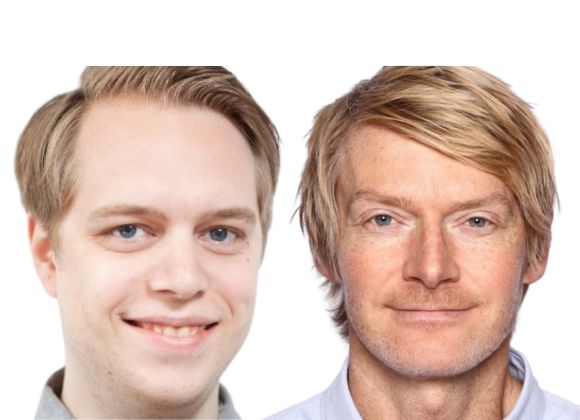
In this podcast, Michael Stiefel spoke to Scott Hanselman about developing new software engineers when artificial intelligence agents are doing most of the work on which junior developers were trained. Hanselman suggests the software industry should adopt a preceptorship model similar to the nursing profession. Under this model, the industry needs preceptors whose sole job is to train new engineers, and these preceptors would be evaluated on how well they train people rather than how much code they ship. The use of AI agents requires experienced engineers because while they are capable of generating software features, they perform poorly at software architecture because they often miss the larger context. In addition, engineers must maintain oversight of artificial intelligence tools by acting as reviewers and coordinators to ensure that human judgment remains central to the development process.
The conversation then broadened to discuss the environment in which agentic AI should be used. When businesses prioritize short term, hyper-optimization, they neglect the longer term investments in human capital and mentorship which will make it impossible to cultivate future senior talent. Beyond that, Hanselman addressed the sociological impacts of modern development, observing that the intersection of remote work, social media, and artificial intelligence severely isolates developers. To counter this isolation and ensure healthy growth, intentional human connection and in-person interactions are vital for the next generation of users and developers of technology.
Key Takeaways
- The software industry should adopt a preceptorship model for developing software engineers. With AI taking over the tasks on which junior engineers were traditionally trained, industry needs preceptors, whose sole job is to train new engineers. This is a model that has worked quite well in the nursing profession. Preceptors are evaluated on how well they train engineers, not how much code they have shipped.
- AI is highly capable of generating software features but performs poorly at designing overarching software architecture, often missing the big picture.
- Engineers must maintain oversight of AI tools by acting as reviewers and coordinators, ensuring that human judgment remains central to the development process.
- Businesses need to prioritize long-term investments in human capital and mentorship over short-term hyper-optimization to prevent the collapse of the junior engineer pipeline.
- The intersection of remote work, social media, and AI isolates developers, making intentional human connection and in-person interaction vital for their healthy growth.
Subscribe on:
Transcript
Michael Stiefel: Welcome to the Architects Podcast, where we discuss what it means to be an architect and how architects actually do their job. We are very lucky today to have as our guest, Scott Hanselman, who is a programmer, teacher, and speaker. He works out of his home office in Portland, Oregon for Microsoft GitHub as a vice president and member of the technical staff. He works on open source and agentic coding tools like GitHub, Copilot, CLI, along with the Windows development platform. Before Microsoft, he was the chief architect at Corillian Corporation, now a part of CheckFree for six plus years. Previously, he worked as a principal consultant at Step Technology, speaking, writing, consulting, and very much not getting rich during Web 1.0, although he worked on a bunch of websites you probably have heard of. He also worked at Intel, Nike, and consulted all over the world.
He was an adjunct professor at OIT teaching C and Web Services and created the first Palm Pilot diabetes management system in 1998 and sold it to a healthcare company some years later. It's great to have you here on the podcast.
How Did You Become An Architect? [01:30]
And I'd like to start out by asking you, were you trained as an architect? How did you become an architect? It's not something you woke up and decided, today I'm going to be an architect.
Scott Hanselman: I mean, architect is one of those titles that one could probably just give themselves like CTO. You'll meet a CTO at somewhere like a big Fortune 5000 company or a Fortune 500 company and they're an architect or they're a CTO and then you'll meet someone who's at Panera with their buddy and they're a founder and they're a CTO as well. So, these are titles that are kind of made up, but I am trained in software engineering. I do point out interestingly enough that I don't have a computer science degree. I have a software engineering degree, which is the practice of shipping, which is different than compiler theory, computer theory, and the things that one learns in computer science many, many, many years ago. I helped write some of the tests for the Microsoft certified software architect stuff with Clemens Vasters lo these 20, 25 years ago.
But what is an architect? Is it someone that knows UML or knows how to do Visio? Are they the one in the room with good taste? Are they the software sommelier? I don't know.
Michael Stiefel: Maybe with AI, we'll get the PowerPoint compiler and that will be-
AI is Not A Good Software Architect [02:49]
Scott Hanselman: We definitely have the PowerPoint compiler. It compiles crap though. But I have said recently on podcasts that AIs generate features extremely well. They do not generate architecture very well. They tend to be somewhat myopic in their view and they definitely miss the big picture. And I'm currently working through a problem with an application that I'm working on where the AI has over the last several weeks created a god object. Just a super struct that I would not have created, but it's kind of a cancer that's building inside the application and I need to get it out of there before it collapses under its own weight. So, the AI did a very poor job of designing an architecture.
How Will the Next Generation of Software Engineers Be Trained? [03:32]
Michael Stiefel: That's an interesting segue into something I know we want to talk about is that you and Mark Russinovich wrote an opinion piece in the Communications of the ACM last April on redefining the software engineering profession for AI. And in it, you discuss the difficulty of training new software engineers when AI is doing all the work we traditionally trained entry-level software engineers. Can you explain what you meant by this and the culture of being a preceptor at scale?
The Preceptor Model For Training Software Engineers [04:04]
Scott Hanselman: So, the idea is in any internship, apprenticeship, master student, teacher student scenario, often the student is doing the wax on, wax off work. They're doing the toil, they're doing the tedium. And it is through the “wax the car” that you learn karate. And if that job is now done by AI, then at what altitude, as I mix my metaphors, does an early in career person enter? Do they just skip the boring bits? Is it important to do the pushups and pull-ups and stuff? And I think that it is important. I think that we are skipping the easy bits and it is extremely dopamine positive and very exciting. And it's certainly a thrill. I'm watching my early-in-career and non-technical coworkers get very, very excited creating software and vibing stuff. But without trying to gatekeep the work, I don't believe that you can vibe into production, or at least not yet.
The Role of a Preceptor is to Create Engineers [05:15]
I feel like early in-career, people need guidance. They need a mentor. But the term mentor or apprentice, journeyman, these are kind of outdated. So, Mark and I looked towards successful industries that are regulated and managed and create successful seniors. And we found that in nursing. My wife is a nurse and she is a nurse preceptor. And a preceptor is an interesting word that is almost exclusively currently used in medicine to refer to the teaching nurse. And that job is an explicit and specific job. Not every nurse is a nurse preceptor. And by having that level of formality, such that the nurse preceptor, the nurse trainer is metriced and their job performance is measured on whether or not they can make nurses. They can mint new senior nurses. In software though, like if I joined your team and you're the CTO or the architect, and you're the boss and you make me the intern or the apprentice, upon entrance, I'm less than.
And that I have to dig myself out of the hole that you've put me in. And then if I don't hack it, you'll go out. Hanselman couldn't hack it. We'll grind them up and spit them out and we'll get another one. So, then interns become a dime a dozen. And if they can't crawl their way out of the bucket, then go and find more. But with preceptors, their job is to make more nurses. So, maybe if we couldn't make more nurses, it's on the trainer. Their annual review would be like, "Maybe Michael shouldn't be a trainer. Maybe he needs some more training to be a trainer". So, there's a formality to it. So, instead of a tech lead with a bunch of cleaves working for them, you have a tech lead working alongside a preceptor trainer. And that trainer's job is not to ship code, but to ship engineers.
So, like after this podcast, I'm going to have my scrum and we're going to cut a release of the product that I'm working on. And there'll be a very mixed group of young people and later in career people. And we're going to do some pair programming and we're going to do some fellowship and some working on stuff together to make sure that we are not just shipping the thing. We're going to cut a release at noon, but that we are shipping senior engineers. That's a big long answer. A lot of rambling there. But I think you understand that the idea is - focus on making people better, not just shipping more crap.
The New Role of the University [07:57]
Michael Stiefel: So, two questions come to mind right away when you say that. One is what then becomes the role of software engineering education in the universities if this is the preceptor? And also, does remote work contribute to the problem and the lack of mentorship, or does it actually help?
Scott Hanselman: As someone who has worked remotely now for many years, my entire career at Microsoft has been remote. I would say that that is hard for anyone and it's even harder for an early in career. So, I would argue that remote work is not helping grow people. Particularly like I've got young men in my house, 18 and 20, and they're going to go out into the world. There is value in them shaking hands, looking people in the eye, talking to human beings. And I know that this might sound like two old men on a podcast shaking their fist at the cloud, but human beings are meant to hang out together. We are meant to be social. I got a lot of value sitting at whiteboards with senior engineers, having them explain to me how things work. If you are an online person who does their socializing online, does their video gaming online, does their everything online, as they're dating online, and now your work is online, then that shows a fundamental collapse of the third place.
The Collapse of the Third Place [09:27]
Work, home, and the third place. And if there is nowhere, if work, home and the third place are all the same place. I don't know how you can grow into a fully formed and healthy individual. So, yes, remote work is a challenge. We can push through it, but it requires a lot of metacognition and a lot of focus on listening to your body, listening to yourself, making sure that you are a whole person. I do drive up to Seattle every four to six weeks to make sure that my badge still works and that the young people are still present. Although I do have folks that are remote in other places. It's the perfect storm of COVID, remote work, social media addiction and AI that threatens to break the young people. And I can only focus on one of those.
Michael Stiefel: So, I want to get back to university in a minute, but this is interesting. What you're saying requires acknowledgement on both sides of the equation because it's the young people, as you say, who live in this virtual world that have to learn the importance of the in-person. And you also need the companies to understand that in order to be profitable in the long term, they have to be willing to have these preceptors to help people along, in the office, if possible.
Measuring How Engineers Thrive [10:51]
Scott Hanselman: Yes. So, you have to acknowledge that hitting the ground running is not a thing and that an early in career person fresh out of school is not going to start slinging code within a couple of days. We do have a metric in our group and we call it engineering thrive, where we call it time to first PR. So, here's your laptop. Welcome to the company. It's Monday. And it's not a productivity metric. It's not, "Oh, Michael joined the company on Monday and he got a PR landed on Wednesday or Thursday". That's actually a morale metric. Think about how exciting it will be for them to land their first PR and how enabled they will be. So, when we talk about engineering thrive, we talk about how do they feel in their personal growth? Even if it's a one line change, it shows that they can begin the engineering loop.
So, back to your question I didn't answer about how this fits into the relationship with universities. They leave their parents' house, they go to university, and then they land a job. And if that entire experience is entirely online, that doesn't facilitate their growth. And if they're using AI at every step, there's also a lack of growth. So, we're trying to insert specific conscious growth moments at every step. And in doing that, we're going to have to coordinate with universities to make sure that AI ethics, AI internals, how AI is used, how AI should be used, so that they don't externalize their brains entirely and have them atrophy just like their social skills have atrophied.
The Danger For Engineers of Anthromorphizing AI [12:32]
Michael Stiefel: I find this across the board, this almost anthropomorphizing of AI. I remember one time I was in the car with my sister and brother-in-law and they were arguing over the instructions that came from the GPS. And the GPS happened to have a woman's voice. And they were saying, "She said this or she said that". And I said, "Stop. It's not a she, it's an it". But this relationship between the software and the individual, when you get to this virtual world, it seems to be very, very tight and seems to be very hard to break and to get an understanding of here's humanity and here's the computer.
Scott Hanselman: Yes. That's a whole podcast in itself. Pre-AI, the idea that we are talking and yelling at these disembodied women in our houses, telling them to turn the lights off, whether it be Cortana or Alexa or any of these things, it's not a healthy thing at all. And as much as ChatGPT is kind of ruining everything, at least it's not given a name. At least it's not Jeff or Anna. I don't think that's healthy. But the problem is that if a parrot can speak, it becomes a much more interesting pet. When dogs do things like cock their eyebrows up or make expressions or smile, we love it. We just love that stuff. I think when AI turns into a robot and starts walking around the house or when the Roomba starts talking back to you, you're going to see even more problematic behaviors. And the movie Her is not an aspirational story.
Michael Stiefel: No, it's not. When the Roomba tells you it should be cleaner and I'm going to go back and clean this even though you told me not to, we've got to another level.
Scott Hanselman: Then you've got problems.
Implementing Preceptorship in Organizations [14:29]
Michael Stiefel: So, do you see any difference in the ability to do this preceptorship with small or midsize organizations or large organizations? Is this a problem or a challenge?
Scott Hanselman: I think it would certainly be easier to do it smaller because you have full control when you have two-pizza teams. I've always been very comfortable with 400 to 500 person companies. Those are the companies that I grew up in and worked in. That's the sweet spot where you know everybody. That was the size of my high school graduating class and that's just a good size. Four or 500 people, you know everybody. Even in big companies though, if you chop it up into pieces like that, like even Microsoft, as big as we are, it's really just a bunch of thousand person companies all kind of coordinating between each other. But we've been able to do it at Microsoft as a pilot with 400 and found it to be successful. And I think if you do it in shards where you have executive buy off and executive support, it is possible.
We just finished our first cohort of preceptors and it's been very successful. I just think the trick is, do we have the organizational willpower to remind all of the bosses that this is as much a human thing as it is a “make capitalism move faster thing”. It is explicitly growing humans is the goal here. Not necessarily shipping code. And in doing that, you have to acknowledge that, yes, they're going to be slow and that's okay.
Michael Stiefel: If you take a long enough viewpoint, the actual humanity and economic incentives should line up because happier people or more productive people are going to stay in the company. But do you see the economic incentives working in your favor to do this?
Scott Hanselman: It will cost you money in the short term, but it's like working out. And this is the thing, people don't work out and then they get sad that they, "Oh, I never worked out. Too late now. Not working out in your 50s is causing you problems in your 70s, too late". Those kinds of problems are going to happen when someone does not grow senior engineers and then they need senior engineers and the only place they can find them is their competitor. And the only way that they can get senior engineers is by poaching them from their competitor. And those senior engineers use their competitor's techniques and their competitor's culture and their competitor's engineering practices. So, they need to focus on growing their own people and their own culture, but they're not going to see a benefit for a couple of years. That's going to take discipline.
AI Induced Loneliness and the Loss of "Flow State" [17:08]
Michael Stiefel: Do you know of any case studies that people have written about this that are public?
Scott Hanselman: Well, we'll do our own for preceptors, but every week there's some new thing coming out like the Harvard Business Review or somebody who is saying that AI powered engineers are getting more done, but they're lonely. There was a really good... I forgot the name of the... I don't have it in my head right now, but it was just two or three days ago, they were saying how lonely people are working in AI. That's because remote work plus social media plus AI has them sitting at home prompting and waiting and prompting and waiting. There was another one about flow state indicating that people are not getting into the flow state anymore and that's making them sad. It's important for us to say the quiet part out loud. If people are sad, that's not okay and we should do something about it.
AI Contributes to the Pre-existing Hyperoptimization of Business [18:02]
Michael Stiefel: I found a study, it was referenced in the Wall Street Journal that since 2017, there's been a general decline in entry level hiring. Is AI part of this problem or is this something more general that is going on?
Scott Hanselman: I think it's more general. I think it is shortsighted hyper optimization and late stage capitalism. I think it's just very shortsighted. And by shortsighted, I mean people don't want to plan 15, 20 years out. People have between 20 and 40 years of productivity in them. And it seems like a long time when you're at the beginning of it. But as I'm at the end of a 35, 40 year career, I'm like, "Wow, that went fast". And I'm thinking to myself, "I need to rush now to teach young people what I learned before I'm gone". Businesses need to have that kind of an attitude. Businesses need to have the same thoughtful attitude as a senior engineer who is close to retirement, but they're not. They're going quarter by quarter. So, I think that it's less about AI. AI is not going to take your job. The hyper optimization of some C-suite executive is going to take your job.
Engineers and the Future Use of AI [19:21]
Michael Stiefel: Well, it's a loaded question, but the question comes to mind is what can we as engineers do to help? Sure, this is an ROI issue. How do we present this case to people?
Scott Hanselman: Well, I think speaking truth to power is important. I think saying the quiet part out loud. Every good revolution starts at the bottom. Simply saying, "I think the engineers would be happier if we did X". Workers' rights matter. And I enjoy working with AI. I find it to be an enjoyable thing, but I find it more fun as a group, as with all activities. Sitting quietly and prompting is not fun. Going from vibes to agentic software engineering techniques. I've got a really nice DevOps framework. I can tell the AI to cut a release. It's a good release. It's tested. The harnesses are good. That's all software engineering stuff around it. I'm just at the very, very, very top. Now instead of typing build.bat, I say build. You know what I mean? It might sound silly, but I can have an idea. I can go for a walk.
I can prompt remotely and I can come and see a prototype when I get back. And then I can review the code and go through it. I'm looking at my other monitor here. I'm using the GitHub Copilot app, which still has code. Half the screen is still code, but it's a diff that I'm reviewing of code that was written. And then I'm commenting on individual lines saying, "Well, this is good and that's good". So, I feel like a sculptor, but I'm really the teacher in a sculpting class and I'm walking around making small changes to everyone else's work, if that makes sense.
Michael Stiefel: Yes. I presume a lot of this is in a context artifact of sorts.
Scott Hanselman: I'm in a session multiplexer of sorts.
Michael Stiefel: Okay.
Scott Hanselman: I'm trying to do a release of a thing today and I've got five pull requests from four different people. And I need to figure out the order in which to take them. If they are architecturally correct and if they are architecturally sound, if anything's creeping in that looks like slop, that is not the direction that we want to go, while still maintaining a pretty crisp clip and speed at which we're working. So, like all of that is, it's a very “coordinatey” job.
Michael Stiefel: But you're still looking at code because I remember the days, I'm dating myself now, when people used to argue over hand-coded assembler as opposed to what the compiler generated. And I presume we will get to some point where the AI is writing code for other AIs and the humans just don't look at it.
Scott Hanselman: Yes. I don't know what I think about that. Human beings have got to keep their hands on the wheel. That's the thing I will always fight for.
Has AI Killed Agile? [22:27]
Michael Stiefel: I personally agree with you. Humans have to be in the loop, which actually raises another thing that I've heard people talk about is that AI has killed agile. I don't know if you have a feeling about that.
Scott Hanselman: I don't think it's killed it as it has taken it to its kind of ridiculous conclusion. Everything we're doing is agile. It's just too agile.
Michael Stiefel: What do you mean by too agile?
Scott Hanselman: When agile in the '90s and the early 2000s was at its peak, people were calling it slop. And they were saying agile is just an excuse to go fast and break things. And when you combine agile, which is a very, very quick inner loop and a very, very quick outer loop and user stories and all that kind of stuff, and then you apply AI to it, you get wheels that spin so fast that they kind of wobble at speed and then the car potentially flies off the road. So, if one believes that agile was a bad idea and they think that AI is a bad idea, combining the two just makes them super bad. But I still use Kanban boards and user stories and I move them forward. So, I find that I keep coming back to agentic software engineering techniques, which is agile, smart DevOps, smart build servers, smart SDLC, except we have this new power tool that has been introduced into the mix. I'm a traditionalist with a new power tool.
Preceptorship and Teaching Software in College [23:56]
Michael Stiefel: But to get back to what we were talking about preceptorship, all this has to be taught to the potential engineer because they are not seeing this from where they sit right now. For example, take the SDLC. When you come out of college, do you understand the SDLC?
Scott Hanselman: So, no, you can't because you were making connect four or tic-tac-toe for your senior project. And even a group project in college is usually three or four people. So, this is why popping off the stack to the beginning of the conversation, I think that software engineering is a degree and a practice that is unique and different and discreet versus computer science. I mean, I like my software engineering degree. I know that there are gaps in my computer science knowledge, but I think that the ideal double major would be both of those things.
Michael Stiefel: But today we have to make those things part of preceptorship because that's the only way people are going to do it.
Scott Hanselman: We do, which is why I think internships, cohorts, senior year should almost entirely be spent in industry working. And I think that that's going to require a lot of effort on the part of industry to acknowledge that we need to invest in the early in career people lest we hollow out the pipeline completely.
Michael Stiefel: And then we're lost.
Scott Hanselman: And that's the whole point of that paper that you mentioned. The junior engineer pipeline, the early in career pipeline will collapse if we do not agree. And then we'll be bringing old people back out of retirement, just like Y2K. And they're going to go and pull me out of retirement in 2035 to go and fix the next big date bug.
Michael Stiefel: I tend to look at this as, you're a farmer and you're eating your seed corn instead of planting it for the next year.
Scott Hanselman: The analogies are legion.
Artificial Intelligence with a Humanistic Perspective [25:46]
Michael Stiefel: Before we get to the architect's questionnaire, which I like to ask all my guests, is there anything that comes to mind that we haven't talked about that you think is important?
Scott Hanselman: I keep coming back to the humanistic perspective. Everyone's talking about the benefits of AI from a, oh, it makes things better. It makes more money. It makes more this. It makes more that. But how do we feel about this? The sociology, the psychology, all of the ologies, all of the science about, are we supposed to feel this way? I think people don't sit and listen to their bodies enough. And I'll be doing my work and I'll kind of go, "I don't feel good right now. Why? Why do I feel this way? Those things need to be taught. You need to go for a walk. You need to drink more water. I don't know why I feel so bad. Everything sucks. Well, are you eating well? No. Are you sleeping well? No. Are you hydrated? No. You went from sleeping all night to sitting all day to then sitting all evening to then sleeping all night.
No wonder you feel like crap. And now you're in the AI loop. We're in the matrix. We need to acknowledge what is a reasonable amount of productivity as a society. We need to understand that we cannot improve 3% every year infinitely. That is by definition cancer. To take a finite system and grow infinitely. This idea of constant, ongoing, forever emergent, infinite growth, that's cancer. So, if AI makes me 20% more productive, okay, 20%, maybe I get Fridays off. But that's not working. Everyone else is working triply hard right now. To what end?
Michael Stiefel: That's the problem with exponential growth. You don't realize a disaster until it's almost too late because it's like the story of the guy who asked for one corn, two corns, four corns,
Scott Hanselman: Oh, yes. Yes.
Michael Stiefel: And before you know it, the king has run out of food because the nature of exponential growth is you're half full the day before disaster strikes.
Scott Hanselman: And humans just don't have any sense how bad they are at understanding how exponential growth works. It just doesn't. We can't even visualize it.
Michael Stiefel: I, for one, for example, when I go to sleep at night, my cell phone is in another room.
Scott Hanselman: That's very healthy. And this is where we need to acknowledge our age and figure out how we can help the young people be better without over-biasing them and acknowledging that we are from a different generation. And we came up with different privileges and different opportunities.
Michael Stiefel: There were disadvantages, but there are certain advantages. I mean, we went out and did free play where we didn't have location services. The point was not to be found as opposed to today where everybody wants to know where everybody is all the time.
Scott Hanselman: Yes, absolutely true.
Michael Stiefel: One of the things that's always been interesting to me is when you define the constraint space for a project, it's the subjective things that are just as much constraints as the fact that you have a latency. I mean, pick a simple example. If you can't get the engineering skills you need, you can have the best architectural design in the world and you aren't going anywhere. So, this conversation is very meaningful to me and I hope our listeners will feel the same way.
The Architect's Questionnaire [29:20]
We're talking about humanizing, because I like to ask several questions to my guests. What's your favorite part of being an architect?
Scott Hanselman: I think it is a thing that didn't exist and then I just thunk it up and now it's a thing. That's not about architecture, that's just about being a maker, a builder. My dad is a woodworker and my mom is a leather worker. And I'll just see a thing, a problem, and I'll go, "Oh, I'm going to fix that". In my garage over here, there's two buttons on the wall to open the garage. And if I pushed the wrong one, it opens the wrong door, right? And it's been bugging me for 20 years. And then I got a 3D printer and I got a pair of calipers and I made a little cover on the thing. And my dad's like, "You could just put a piece of tape over it". And I'm like, "Well, yes, but I got a pair of calipers and I made a cool 3D printed colored button". It's like a nuclear button where you flip it up and push the red button kind of thing.
That's way cooler. But the point is that it didn't exist. I thought about all the 20 ways I could have solved it from cardboard to paper to painter's tape to an over-engineered 3D printed thing. I love being able to just make a thing that didn't exist yesterday. Another example was I wanted to get a Peloton, but Pelotons are really expensive. So, I went and I went to Goodwill and I got a $30 bike and then an Android tablet. And then I made a website that lets me go on scenic bike rides in 3D. It's called PedalScape. I had that idea at 10:00 and by that evening I was riding my bike through Bavaria.
Michael Stiefel: And you realize there's a whole industry now of software that enables you to do virtual rides throughout.
Scott Hanselman: Oh, yes. I love that stuff. Yes. But I wanted one for myself and I made it.
Michael Stiefel: What is your least favorite part of being an architect?
Scott Hanselman: A younger Scott would've said waiting, but I don't think I have a least favorite part anymore. I enjoy the waiting. You can't just flash boil water to make tea. You have to kind of wait. I don't think I have a least favorite part. It's kind of all good, honestly.
Michael Stiefel: I think you may have answered this before, but is there anything creatively, spiritually, or emotionally compelling about architecture being an architect?
Scott Hanselman: I just keep coming back to humans. All of this is to make something that is delightful, that makes someone's life measurably better in some way, whether it be building architecture or drawing a picture or interior design as a kind of architecture. Software architecture is that thing will hold up under stress. I always come back to those high school classes where you make a bridge out of pickup sticks and what are those things called? Ice cream sticks.
Michael Stiefel: Popsicle sticks.
Scott Hanselman: Popsicle sticks. That's extremely satisfying to like, I made a thing and it also holds up under pressure.
Michael Stiefel: What turns you off about architecture being an architect?
Scott Hanselman: Again, I think nothing, but I would say documentation and Visio. I was doing Visio-style architecture for 10 years. And as much as I love Grady Booch, manually drawing UML diagrams was definitely not my favorite part of the experience. Shout out to Grady though.
Michael Stiefel: Do you have any favorite technologies?
Scott Hanselman: I'm a big fan of my open source artificial pancreas. When I was diagnosed diabetic 35 years ago, it was manual shots and pricking your finger. Mine's actually, it's clicking in my arm right now. I just heard it deliver insulin a moment ago and my blood sugar is as good as yours. Or dare I say better. Being a cyborg is a pretty favorite technology and it's a good solid architecture behind it.
Michael Stiefel: What about architecture do you love?
Scott Hanselman: I think the same answer as before, making stuff that holds up under pressure. I know that the argument of software architecture being a parallel to building architecture is one that has been argued many, many times. But I was in, I want to say Morocco, and I was looking at like the second or third-largest mosque in the world. You can't be unaffected by that. Holy crap, that's a building right there. You know what I mean?
Michael Stiefel: And it's lasted.
Scott Hanselman: Yes. Thousand years. You know what I mean? So, if I could get a piece of software to last more than 20 or 30 years, I think I'd be pretty thrilled.
Michael Stiefel: What about architecture do you hate, if anything?
Scott Hanselman: I don't hate as a general rule. It's a strong feeling I try not to have.
Michael Stiefel: What profession other than being an architect would you like to attempt?
Scott Hanselman: I am a teacher. I've always been a teacher. I'm not an architect. I'm a teacher. I've always been a teacher. Teaching is a very secret selfish thing because teaching is building, right? And I love the feeling of being able to build minds.
Michael Stiefel: Which is probably why you realize the importance of preceptorship, which other people may not have.
Scott Hanselman: I figured it out a couple of years ago that I've been teaching this whole time. So, I might as well quit and teach.
Michael Stiefel: Well, I was an independent consultant for a long, long time. And I found if I taught my clients, they would be less of a burden.
Scott Hanselman: Yes.
Michael Stiefel: So, teaching makes your life easier.
Scott Hanselman: Teach a man to fish. 100% agree.
Michael Stiefel: Do you ever see yourself not being an architect anymore?
Scott Hanselman: Yes. I think in 900 days when I retire, I will go and be an architect of minds. I will be a teacher.
Michael Stiefel: And finally, when a project is done, what do you like to hear from the clients or your team?
Scott Hanselman: I was thinking about that movie when the very end of Babe, when they go, "That'll do, pig". There's a project that I did for a company here called Pioneer Courthouse Square. It's basically the living room for Portland, Oregon, where it's like all these bricks in the center of the city. And on the bricks are people's names, and everyone's bought their own brick. So, my grandma has a brick and you can go, and find your brick. There's an app at the kiosk there, where you can go and look up your name, and then it'll make a printout and put an X over your brick, and then you go and you find your brick. I wrote that, I want to say in, 1996.
Michael Stiefel: Oh, my.
Scott Hanselman: I'm not joking. It's literally a 30-year-old Visual Basic app. And every five to seven years, they'll call me and make some small change. But that thing's running on Access 95 and Visual Basic, and it's still working. That is very satisfying.
Michael Stiefel: Thank you very much. I found this very, very enjoyable conversation and highlighting something I think is very important for people to realize and think about.
Scott Hanselman: Yes, it's my pleasure. And nice to see you.
Mentioned:
- Russinovich, M., & Hanselman, S. (2026). Redefining the Software Engineering Profession for AI. Communications of the ACM.
- De Cremer, D., & Koopman, J. (2024). Research: Using AI at Work Makes Us Lonelier and Less Healthy. Harvard Business Review.
- Non-paywalled summary
- Ellis, L. (2025). AI Is Wrecking an Already Fragile Job Market for College Graduates. The Wall Street Journal.
- Jonze, S. (Director). (2013). Her [Film]. Annapurna Pictures.
- OpenAPS (Open Source Artificial Pancreas System).