InfoQ Homepage Development Content on InfoQ
-

Multi-Cloud FinOps: an Engineering Framework for Cross-Cloud Cost Optimization
Multi-cloud flexibility comes with hidden egress costs driven by service placement and communication patterns. This article applies Backend FinOps to cross-cloud architecture, covering cost visibility through FOCUS, workload placement, synchronization models, and CI/CD-integrated cost governance. A controlled experiment shows architecture changes saved far more than rate negotiation alone.
-
Distributed Spring Batch without a Message Broker
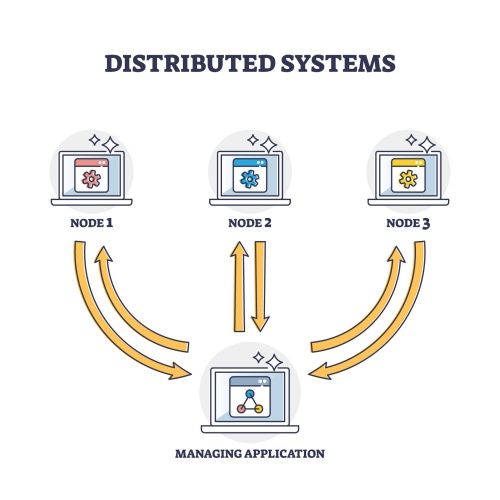
Distributed Spring Batch partitioning already needs a shared, persistent job repository. This article makes that database the whole coordination plane and drops the message broker, sizing work to the live node count, a per-job master with no standing coordinator, compare-and-set claiming that prevents double-execution, two-phase heartbeat failover, and where a broker is still the right choice.
-

Cryptographic Foundation of Mobile ID Systems: an ISO/IEC 18013-5 Enterprise Architecture Blueprint
This article provides a framework for asking the right architectural questions before an enterprise commits to an mDL provider or library. It shows which components can be abstracted safely, which trust boundaries must remain visible to the enterprise, what cryptographic and interoperability properties should be verified, and how requirements change across real-world use cases.
-

Server-Side DPoP and Token Exchange in Spring Security 7
Spring Authorization Server now lives inside Spring Security 7 under the same Maven coordinates, so the upgrade is a version bump. This server-side guide covers enabling DPoP and RFC 8693 Token Exchange, explains why 7.1 apps can silently stop enforcing DPoP until they call .dPoP(), and shows how to combine both into narrowed, sender-constrained tokens for service-to-service and agentic calls.
-
From Reusable to Regeneratable: Rethinking the Shared UI Component Library
Regeneration has changed reuse economics. A model pointed at a solid design system can produce most standard UI on demand, so paying to keep a canonical component package alive is much harder to justify than it used to be. Keep the design system, tokens, guidelines and tests central. They are what actually buy you consistency.
-

High Availability is Not Resilience: Why Cloud Systems Fail When it Matters Most
A routine TLS 1.3 upgrade silently broke Route 53 health checks, causing a CDN to stop routing traffic to a healthy region while internal dashboards showed nothing wrong. This article examines why HA and resilience are different problems, how control-plane dependencies create invisible failure modes, and why recovery capability erodes without explicit ownership.
-

Five Ways to Use AI Coding Agents to Improve Your Software Architecture
Modern architectures often use legacy services for specific tasks, but these services may lack accurate documentation and using them can be risky if you don't understand them well. AI coding agents can help close that knowledge gap.
-

The Agent Harness: What it is and Two Ways to Build One
This article explains the development and operational layers of an agent harness through two implementations of a finance assistant: AWS AgentCore Harness and LangChain with Envoy AI Gateway. It compares how each handles tools, memory, model access, cost control, and observability, and examines the trade-offs in operational ownership, portability, and engineering effort.
-

Modular Edge Computing at Multi-Tenant SaaS Scale on Cloudflare Workers
At multi-tenant SaaS scale, a monolithic edge worker creates deployment coupling and broad blast radius. The article presents a modular Cloudflare Workers architecture using service bindings, with image optimization as a worked example of per-tenant format negotiation and device-aware sizing. It covers multi-CDN differences, staged releases, configuration, and testing.
-

Architecting Secure and Scalable Facial Verification Systems
When three thousand employees verify at once, synchronous API calls collapse. This article presents a four-layer architecture for high-volume face verification: client-side filtering that cut cloud costs 30%, decoupled detection and verification enabling 10x scaling, risk-based dynamic thresholds, and zero-trust privacy with consent gates and automated data purging for GDPR and HIPAA.
-

Your Next DSL Author is a Language Model
In this article, the author introduces Typed Domain Grounding, an approach to reducing LLM hallucinations in domain-specific languages by embedding them in mainstream typed languages. Using kUML benchmarks and an infrastructure-as-code example, he explores how compiler validation and generate-compile-repair loops can make model-generated DSL output more reliable.
-

Implementing Chaos Engineering in Financial Payment Systems: Lessons from Enterprise ECS Deployments
Standard chaos engineering assumes experiments stop cleanly, blast radius is knowable in advance, and production is fair game. Payment systems violate all three. Salim Adedeji describes ECS-specific failure modes from enterprise deployments: a 60-second DNS TTL that produced 93-second failover, retry logic amplifying database load 2.4x, and AZ rebalancing loops that generic tooling misses.