InfoQ Homepage Podcasts
About this Podcast
Intended for architects and senior developers.
-
Context is the Key to the Agentic Architecture Revolution: a Conversation with Baruch Sadogursky
Michael Stiefel spoke to Baruch Sadogursky about software architecture in the age of agentic AI. LLM can function, albeit stochastically, as reasoning machines capable of interpreting human ambiguity. With the appropriate rigorous context artifacts to control the LLM’s reasoning, software specifications can become the source of truth, while the code becomes a disposable intermediate language.
-
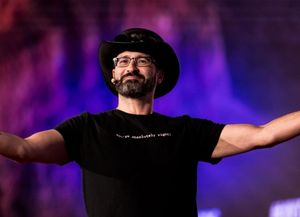
From Java EE to Quarkus and LLMs: Adam Bien’s Playbook for Boring, Future‑Proof Systems
Adam Bien, an independent consultant and pioneer of zero dependencies in the enterprise world of Java, highlights the benefits of consistently using standards, regardless of whether they involve Java or existing patterns. He argues that by doing so, he managed to future-proof the systems he built, preparing them for the cloud era and even for the AI-Native era.
-
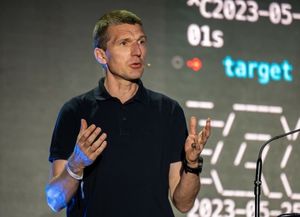
Roq: Leveraging Quarkus to Build Static Sites at the Speed of Go
Andy Damevin, a developer who worked on Quarkus for almost a decade, talks about Roq, a project that started as an experiment to try to see if it’s possible to build a static web site generator on top of quarkus. He touches on the rationale for choosing Java and Quarkus, how to migrate to Roq, and the platform's future.

-
A Java Performance Quest: Taming Unsafe Code, Embracing Idiomatic Style & Debugging the Linux Kernel
In this podcast, Jaromir Hamala, a seasoned Java engineer specialising in high-throughput data systems, shares his thoughts on how developers can tackle high-performance software development. He touches on the benefits of modern Java that allow writing idiomatic Java code while remaining "mechanically sympathetic", and also on his experience debugging a Linux kernel bug.

-
Engineering Stable, Secure and Scalable Platforms: a Conversation with Matthew Liste
In this podcast, Michael Stiefel spoke to Matthew Liste about building and managing software platforms. Platform services act as the basis for application development, and must always be stable, secure, and scalable. Scaling these systems is particularly difficult because unknown resource contention often causes them to break.

About this Podcast
Discussions on intentional corporate culture and software management approaches.
-
The Myth of 100% Utilization: The Neuroscience of Productive Teams
In this podcast, Shane Hastie, Lead Editor for Culture & Methods, spoke to Shannon Mason about optimizing team productivity by understanding the neuroscience behind cognitive load, distinguishing between beneficial "slack time" and detrimental "idle time", and how the pursuit of maximum utilization that leads to burnout and poor decision-making.

-
Why Software Development Sucks And 7 Mental Models To Help Fix It
Shane Hastie, Lead Editor for Culture & Methods, spoke to Thanos Diacakis about how teams often struggle with software delivery. He proposes a shift in mental models and a four-step framework to systematically improve software development by focusing on bottlenecks, balancing different types of work beyond just feature delivery, and investing 20-30% of effort in improving how the team works.

-
The Evolution of Code Review: From Bug-Finding to Team Building
In this podcast, Shane Hastie, Lead Editor for Culture & Methods, spoke to Greg Foster about the evolution and purpose of code reviews, building teams with kindness, expertise, and urgency, and how AI tools are changing software development.

-
Building a Resilient and Inclusive Engineering Culture with Matthew Card
In this podcast, Shane Hastie, Lead Editor for Culture & Methods, spoke to Matthew Card about his resilience framework (CAPSS - Confidence, Adaptability, Purpose, Social Support) which has helped him overcome career challenges and now guides him in building inclusive engineering cultures by empowering teams and breaking echo chambers.

-
Finding Your Engineering Bottleneck: The Hierarchy of Engineering Needs
In this podcast, Shane Hastie, Lead Editor for Culture & Methods, spoke to Myles Henaghan about the open-sourced "Hierarchy of Engineering Needs" - a systematic framework inspired by Maslow's hierarchy that helps engineering leaders identify and prioritize the most impactful constraints limiting their software delivery systems among competing improvement initiatives.