InfoQ Homepage Large language models Content on InfoQ

About this Podcast
Intended for architects and senior developers.
-
Distributed LLM Inference on Kubernetes with llm-d, Wasm, & TornadoVM
In this episode, Edoardo Vacchi discusses the evolving landscape of WebAssembly on the backend, running Java workloads on GPUs using TornadoVM, and optimizing distributed AI inference using llm-d and vLLM on Kubernetes. Edoardo explains how llm-d manages cache locality (KV and prefix caches), request routing, and batch inference across Kubernetes clusters to maximize expensive GPU utilization.

-
AI, ML, and Data Engineering InfoQ Trends Report 2026
In this episode, members of the InfoQ AI and ML editorial staff and friends of InfoQ discuss the current trends in the domain of AI, ML and Data Engineering. One of the regular features of InfoQ are the trends reports, which each focus on a different aspect of software dev. These reports provide the InfoQ readers and listeners with a high-level overview of the topics to pay attention to this year.
-
Future Cybersecurity: Hardware Memory Safety, Automated Governance and Post-Quantum Cryptography
In this episode, Chris Swan, engineer at Atsign and security track host at QCon London, reflects on the ideas shared during QCon London 2026 and teases topics of the future edition. The discussion explores how security engineering is shifting from relying on human vigilance toward automated, system-level defences across the entire application stack.

-
The Future of AI: from Enterprise Adoption to Open Source Sovereignty
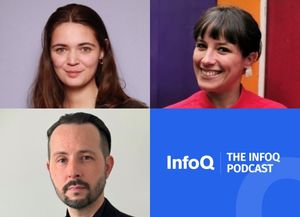
In this episode, Meryem Arik, Clara Higuera Cabañes, and Jeff Smith demystify the current state of AI in the enterprise. The discussion navigates the "industrial revolution" moment in AI adoption, exploring why companies are rushing toward these technologies to maintain competitive advantages while grappling with reliability, ethical considerations, and the evolving role of software engineering.
-
Scott Jenson on Evolving Desktop OS, Local-First, & Agentic UX
In this episode, Scott Jenson, a veteran UX designer known for his work on the Macintosh, Google Maps, and Chrome, examines the long-term stagnation of desktop operating systems and the limitations of current mobile and cloud-centric models.

About this Podcast
Discussions on intentional corporate culture and software management approaches.
-
Making Code Explain Itself – Observability Through AI
In this podcast Shane Hastie, Lead Editor for Culture & Methods spoke to Dr. Elizabeth Lawler, the founder and CEO of AppMap, about observability in the age of AI, creativity in programming and problems developers face on a day-to-day basis.
